
NEW DELHI —Air LORA In a move that signals a tectonic shift in South Asian aerial dynamics, the Indian Air Force (IAF) is set to integrate a lethal triad of Israeli-developed weapons. This multi-billion-dollar acquisition follows the high-intensity lessons of Operation Sindoor in May 2025, where the IAF successfully dismantled terror infrastructure while navigating a dense environment of electronic warfare.
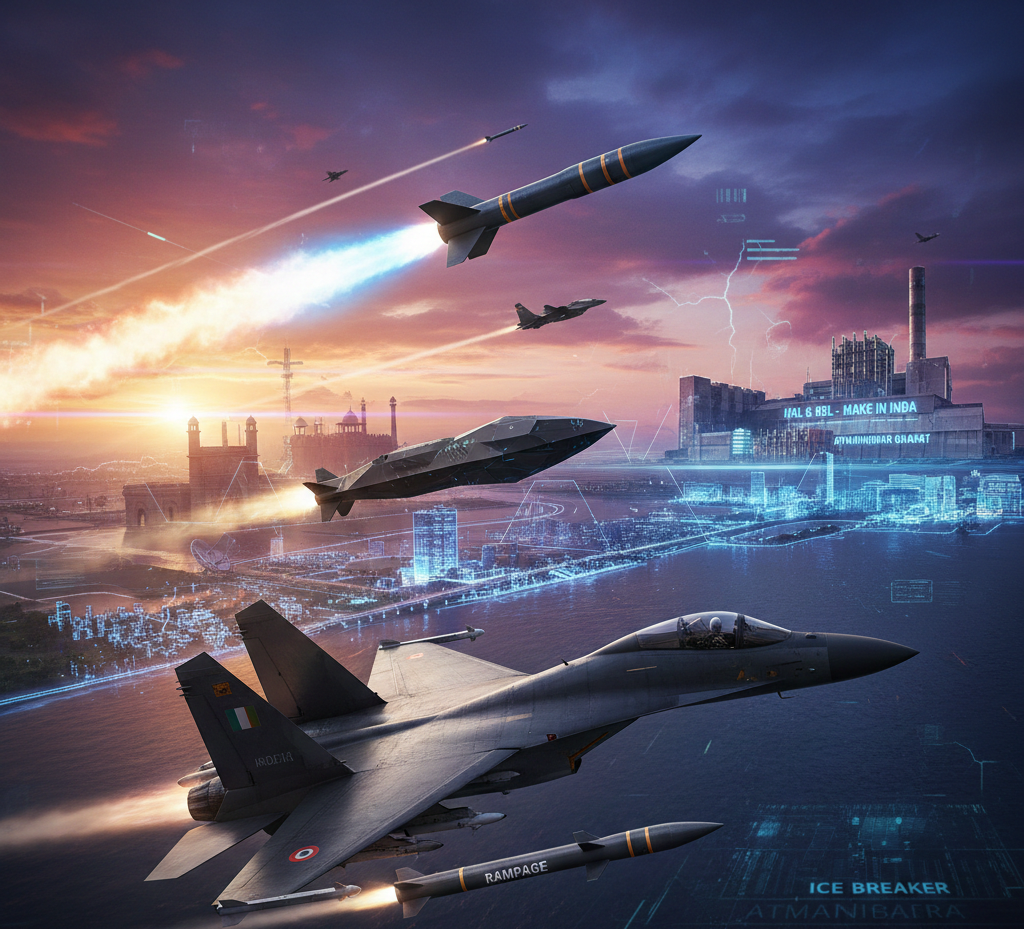
The centerpiece of this modernization is an $8.7 billion procurement package greenlit by the Defence Acquisition Council (DAC). At its heart are three weapons designed to ensure India’s “first-look, first-strike” dominance: the Rampage, the Air LORA, and the AI-driven Ice Breaker.
1. The Rampage and air LORA: The Battle-Proven Scalpel
The Rampage has already earned its stripes. During the 2025 skirmishes, it was the weapon of choice for surgical strikes against high-value targets in GPS-denied environments.
- Capabilities: A supersonic, long-range air-to-ground missile that excels at penetrating bunkers and neutralizing command centers.
- The IAF Edge: Integrated into the Su-30MKI, MiG-29, and Jaguar, it allows pilots to strike targets up to 250 km away. Its anti-jamming GPS/INS guidance makes it virtually immune to the electronic interference that was rampant during recent border tensions.
2. Air LORA: The Hypersonic Sledgehammer
While the Rampage is a precision tool, the Air LORA (Long Range Artillery) is a deep-strike ballistic powerhouse. This air-launched variant of the sea-to-land LORA system represents a massive leap in range.
- Speed and Range: Travelling at Mach 5, the Air LORA covers a staggering 400+ km.
- Strategic Impact: It allows the IAF to neutralize hostile air defense systems and missile batteries deep within enemy territory without the aircraft ever leaving the safety of Indian airspace. With a precision accuracy (CEP) of under 10 meters, it is designed for “decapitation” strikes against enemy leadership and infrastructure.
3. Ice Breaker: The “Ghost” in the Machine
Perhaps the most futuristic of the trio, the Ice Breaker is a 5th-generation autonomous cruise missile that uses Artificial Intelligence (AI) to think on the fly.
- Autonomous Intelligence: Developed by Rafael, the Ice Breaker doesn’t just follow a path—it “sees.” Using deep learning and scene-matching technology, it can identify and prioritize targets autonomously, even if GPS is completely jammed.
- Stealth and Versatility: Its low-observable (VLO) design and sea-skimming flight profile make it a “ghost” to modern radar. Weighing only 400 kg, it turns India’s indigenous LCA Tejas into a long-range strategic threat capable of hitting targets 300 km away.
The “Atmanirbhar” Blueprint: Manufacturing the Future
This deal is not merely an import; it is a technology transfusion. Under a landmark Memorandum of Understanding (MoU), India has secured a comprehensive Transfer of Technology (ToT).
Domestic defense giants Bharat Electronics Limited (BEL) and Hindustan Aeronautics Limited (HAL) will oversee the end-to-end production of these missiles on Indian soil. This move ensures that India’s strike capability is not dependent on foreign supply chains during a prolonged conflict, fulfilling the core vision of the Aatmanirbhar Bharat initiative.
Why This Trio Changes Everything
The geopolitical reality of 2026 is one of layered air defenses and aggressive electronic jamming. By combining the supersonic speed of Rampage, the ballistic reach of Air LORA, and the AI stealth of Ice Breaker, the IAF is no longer just defending borders—it is projecting power.
This “Unstoppable Trio” ensures that the Indian Air Force can operate with impunity, delivering a calibrated and decisive response to any threat, anywhere, at any time.
To help your readers understand the complexity of this deal, here are the most frequently asked questions (FAQs) based on the report. These are optimized for a “People Also Ask” search section.
Frequently Asked Questions (FAQs)
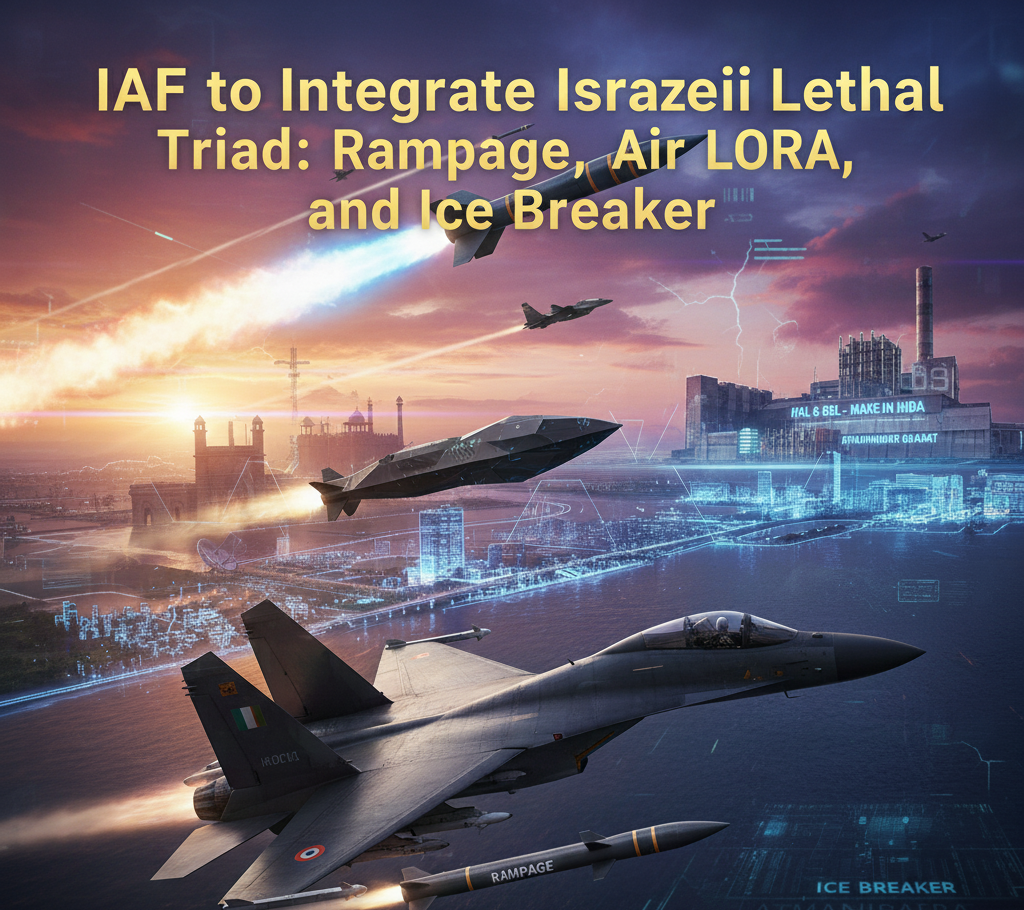
Q1: What is the “Lethal Triad” being integrated into the Indian Air Force? The “Lethal Triad” refers to three advanced Israeli-made stand-off weapons: the Rampage (supersonic air-to-ground missile), the Air LORA (long-range ballistic missile), and the Ice Breaker (AI-driven autonomous cruise missile). Together, they provide supersonic speed, long-range power, and stealth capabilities.
Q2: How much is the IAF missile deal with Israel worth? The procurement package is valued at $8.7 billion. This multi-billion-dollar deal was recently greenlit by the Defence Acquisition Council (DAC) to modernize India’s aerial strike capabilities following the strategic lessons of 2025.
Q3: Which Indian aircraft will carry these new missiles? The weapons are being integrated across various platforms:
- Su-30MKI, MiG-29, and Jaguar: Primary carriers for the Rampage.
- LCA Tejas: Specifically mentioned as a carrier for the lightweight, 5th-gen Ice Breaker missile.
Q4: What makes the “Ice Breaker” missile different from traditional missiles? Unlike traditional missiles that rely heavily on GPS, the Ice Breaker is a 5th-generation autonomous missile. It uses Artificial Intelligence (AI) and deep-learning scene-matching technology to “see” and identify targets independently, making it highly effective in electronic warfare or GPS-jammed environments.
Q5: Will these missiles be manufactured in India? Yes. Under the Aatmanirbhar Bharat (Self-Reliant India) initiative, the deal includes a full Transfer of Technology (ToT). Domestic defense giants Hindustan Aeronautics Limited (HAL) and Bharat Electronics Limited (BEL) will manufacture these missiles locally to ensure a steady supply chain during conflicts.
Q6: What is the range of the Air LORA missile? The Air LORA is a “hypersonic sledgehammer” with a staggering range of over 400 km. Traveling at Mach 5, it allows the IAF to hit deep-strike targets, such as command centers and air defenses, without leaving Indian airspace.