
Taj Mahal Bhagwa Row: What Really Happened?
A recent viral video has sparked controversy at the iconic Taj Mahal, raising questions about whether Hindu seer Jagat Guru Paramhans Acharya was stopped from entering the monument due to his saffron (bhagwa) attire.

The incident has quickly gained attention across social media, leading to debates about religious expression, security rules, and the preservation of historical sites.
Who is Paramhans Acharya?
Jagat Guru Paramhans Acharya is a Hindu religious leader known for his outspoken views on cultural and religious matters. His visit to the Taj Mahal in Agra became controversial after he alleged that he was denied entry.
Why Was He Stopped at the Taj Mahal?
According to reports and available information:
- Paramhans Acharya arrived at the Taj Mahal wearing saffron robes
- He was also carrying a religious staff (Brahmadand)
- Security personnel from the Central Industrial Security Force (CISF) stopped him at the entry point
The primary reason cited was related to security rules, as certain items are not allowed inside the monument. Visitors are required to deposit restricted items before entry.
Reports suggest that he refused to comply with these guidelines, which led to him being denied entry.
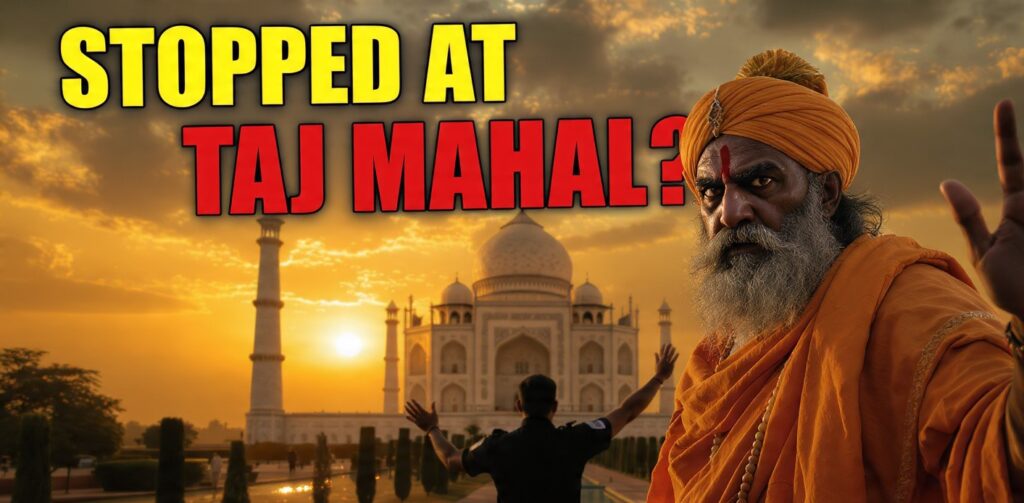
Was It Really About Bhagwa (Saffron) Clothes?
This is where the controversy began.
- Claim: Entry was denied due to saffron attire
- Official perspective: Denial was due to carrying a restricted item
There is no confirmed official statement stating that saffron clothing was the reason. Security forces generally follow standard rules that apply equally to all visitors.
Why Taj Mahal Has Strict Security Rules
The Taj Mahal is one of India’s most important heritage sites and a UNESCO World Heritage Site. Due to its global significance, strict regulations are enforced to:
- Protect the monument from damage
- Maintain order and discipline
- Ensure safety for all visitors
Even minor rule violations can lead to denial of entry, regardless of who the visitor is.
Public Reaction and Controversy
The incident triggered mixed reactions:
- Some groups called it disrespectful and raised objections
- Others supported the action, stating that rules must be followed
- Social media amplified the issue, leading to widespread debate
The situation highlights how quickly local incidents can turn into national discussions.
Conclusion
The Taj Mahal Bhagwa row involving Paramhans Acharya appears to be a mix of viral claims and security protocol enforcement. While the viral narrative focuses on saffron attire, available information points more toward rule violations related to restricted items.
For readers, it is important to rely on verified facts rather than assumptions. Respecting both cultural sentiments and the rules of protected monuments is essential to maintaining harmony and preserving India’s heritage.