
Introduction
A tragic railway accident has shocked the nation after 7 killed in Jakarta train crash, raising serious concerns about rail safety in Jakarta, Indonesia. The devastating collision between two trains has left multiple casualties and several injured, prompting an immediate response from authorities
What Happened in the Jakarta Train Crash?
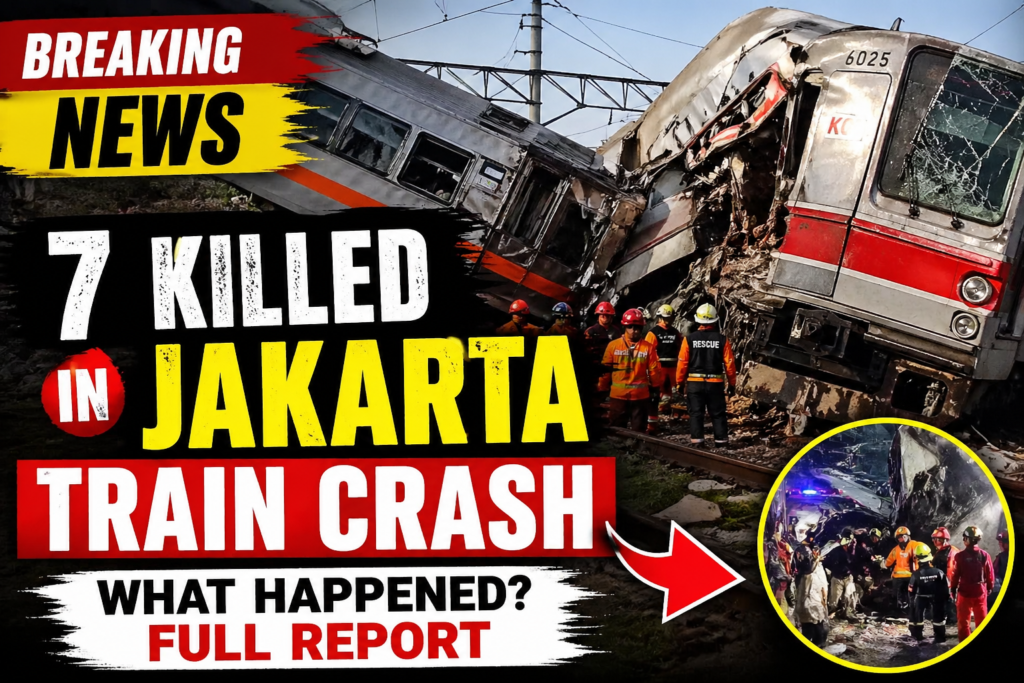
According to initial reports, the accident occurred when two trains collided on a busy railway route near Jakarta. The collision was reportedly severe, leading to derailment and extensive damage to multiple train coaches.
Emergency services rushed to the scene shortly after the crash. Rescue teams worked tirelessly to pull passengers from the wreckage, while injured victims were transported to nearby hospitals.
Casualties and Injuries
Authorities have confirmed that at least 7 people were killed in the Jakarta train crash, with dozens more injured. Some victims are reported to be in critical condition, increasing fears that the death toll may rise.
Hospitals across Jakarta have been placed on high alert to handle the sudden influx of patients.
Possible Cause of the Accident
While the exact cause is still under investigation, early indications suggest:
- Signal failure or miscommunication between control systems
- Human error
- Possible technical malfunction
Officials from Indonesia’s transportation authority have launched a full-scale inquiry to determine the exact reason behind the collision.
Government and Public Reaction
Government officials expressed deep sorrow over the incident and promised strict action once the investigation concludes. Emergency response teams and local authorities have been praised for their quick action in rescue operations.
The tragic news has sparked widespread concern among citizens, with many calling for improved railway safety measures to prevent such disasters in the future.
Railway Safety Concerns in Indonesia
This incident has once again highlighted the importance of railway safety in Indonesia. With millions relying on trains daily, maintaining strict safety protocols is crucial.
Experts are urging:
- Regular maintenance checks
- Advanced signaling systems
- Improved staff training
Conclusion 7 Killed in Jakarta Train Crash
The 7 killed in the Jakarta train crash mark a heartbreaking moment for Indonesia. As investigations continue, the focus remains on supporting victims and ensuring such tragedies are avoided in the future.
FAQ: 7 Killed in Jakarta Train Crash
1. What happened in the 7 Killed in Jakarta Train Crash?
The 7 Killed in Jakarta Train Crash refers to a tragic collision between two trains near Jakarta, resulting in multiple casualties and injuries. The crash caused severe damage and derailment of train coaches.
2. How many people died in the Jakarta train crash?
At least 7 people were killed in the Jakarta train crash, while several others were injured. Authorities have stated that the number may increase as rescue operations continue.
3. What caused the Jakarta train accident?
The exact cause is still under investigation. However, early reports suggest possible causes, including signal failure, human error, or technical malfunction.
4. Where did the train crash happen?
The accident occurred near Jakarta in Indonesia, on a busy railway route used by daily commuters.
5. How are authorities responding to the incident?
Emergency teams quickly arrived at the scene to rescue passengers and provide medical assistance. Government authorities have also launched a full investigation into the crash.
6. Are train services affected after the crash?
Yes, several train services were disrupted following the accident. Authorities are working to restore normal operations while ensuring safety checks are completed.
7. What safety measures are being considered after the crash?
Experts are recommending improved signaling systems, stricter safety protocols, regular maintenance, and better staff training to prevent future accidents.
8. Is the Jakarta train crash under investigation?
Yes, officials in Indonesia have started a detailed investigation to determine the exact cause and prevent similar incidents.