
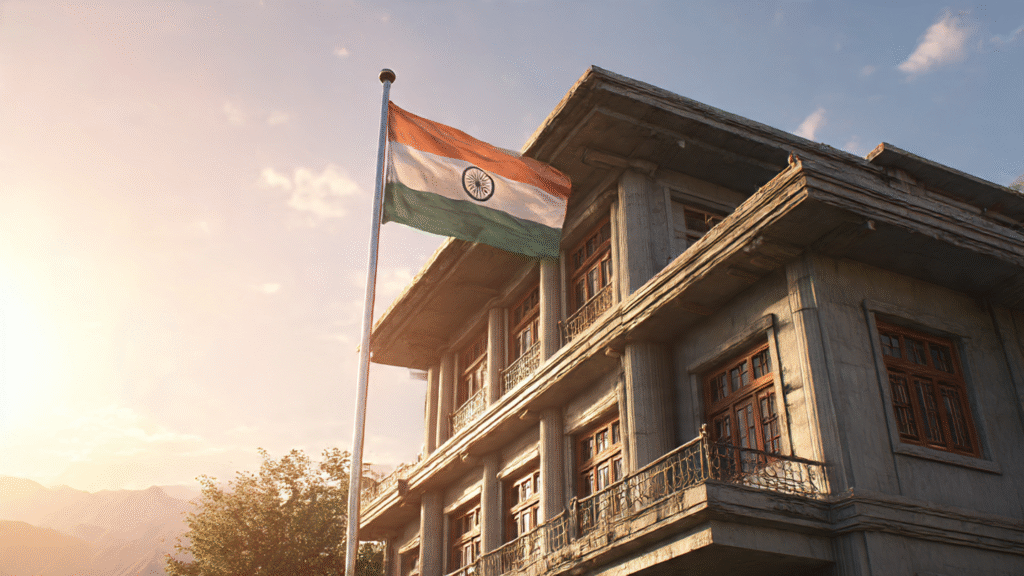
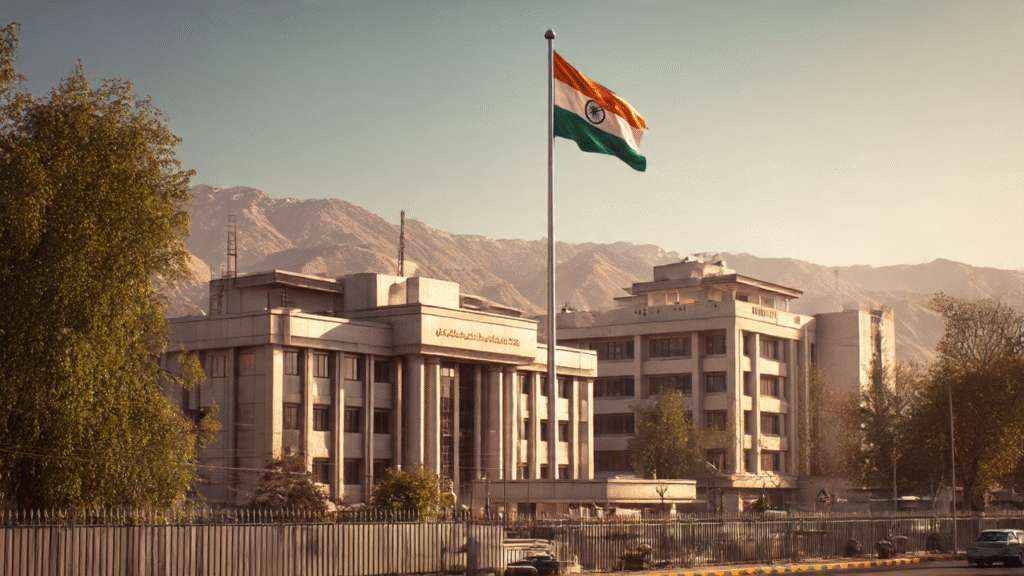
New Delhi: India Embassy in Kabul 2025 In a major diplomatic development, India has decided to upgrade its Technical Mission in Kabul to a full-fledged embassy with immediate effect, marking the country’s strongest re-engagement with Afghanistan since the Taliban takeover in 2021.
The Ministry of External Affairs (MEA) announced that the decision aims to strengthen India’s diplomatic and humanitarian outreach, while ensuring that New Delhi remains an active stakeholder in Afghanistan’s stability and reconstruction.
Here are the five key implications of India’s move to restore its embassy in Kabul.
1. Restoration of Full Diplomatic Presence of India Embassy in Kabul 2025
With the upgrade, India has effectively restored its full diplomatic presence in Afghanistan after a gap of over three years.
The move indicates a shift from limited technical engagement to a broader diplomatic framework, allowing Indian officials to operate and coordinate more effectively on the ground.
MEA sources stated that the embassy will continue to focus on “development cooperation, humanitarian support, and people-to-people ties,” emphasizing that this step does not amount to recognition of the Taliban government.
2. Balancing Regional Influence India Embassy in Kabul 2025
The decision is also viewed through the strategic lens of regional balance. For years, Pakistan has enjoyed a dominant role in Afghanistan’s political landscape.
By reestablishing its embassy, India appears keen to reassert its influence and ensure its interests are protected amid the evolving power dynamics in the region.
Analysts believe that a functional Indian mission in Kabul will serve as a counterbalance to Pakistan’s growing presence, while providing India a platform for direct dialogue with Afghan stakeholders.
3. Renewed Development and Humanitarian Cooperation
India has been a major development partner for Afghanistan, having invested over $3 billion in projects such as the Afghan Parliament building, Salma Dam, and various infrastructure and education initiatives.
The embassy’s reopening could pave the way for the resumption of suspended development projects, the delivery of medical aid, and the restoration of scholarships for Afghan students.
Officials say this step will help India rebuild trust and goodwill among the Afghan population, a cornerstone of its foreign policy in the region
4. Strengthening Security and Intelligence Coordination
The return of Indian diplomats to Kabul also has security and intelligence implications.
Sources suggest that India is keen to closely monitor security developments, particularly the activities of terror groups operating along the Afghanistan-Pakistan border.
A direct diplomatic presence enables India to gather firsthand intelligence and coordinate regional counterterrorism efforts more effectively.
Experts view this as a proactive step toward safeguarding India’s national security interests..
5. Reviving Regional Connectivity and Trade Initiatives
The reopening of the embassy could help revive regional trade and connectivity projects, including those linked to Chabahar Port and International North-South Transport Corridor (INSTC).
Officials say renewed engagement with Afghanistan could open doors for energy cooperation, transit routes, and commercial exchanges, all of which align with India’s long-term strategic objectives in Central Asia.
A Strategic Comeback India Embassy in Kabul 2025
India’s decision to restore its full diplomatic mission in Kabul marks a significant shift in policy, signaling a willingness to engage pragmatically with the realities on the ground.
While New Delhi maintains that it has not formally recognized the Taliban regime, this move underscores its intent to remain an active player in shaping Afghanistan’s future.
Analysts say the step reflects India’s growing confidence in its diplomatic outreach and its determination to secure its interests in an increasingly complex regional environment.
Conclusion
India’s decision to upgrade its Technical Mission in Kabul to a full-fledged embassy marks a significant diplomatic milestone. It highlights New Delhi’s intent to re-engage with Afghanistan while maintaining a careful balance between humanitarian commitment and strategic caution.
Although the move does not imply formal recognition of the Taliban government, it clearly signals that India intends to play a constructive role in the country’s recovery and stability.
Experts believe that this development could reshape regional dynamics, strengthen India’s intelligence network, and revive long-standing cultural and economic ties. In a region marked by shifting alliances, India’s return to Kabul represents not only a strategic comeback but also a reaffirmation of its long-term vision for peace and partnership in South Asia.
FAQs on India Restoring Its India Embassy in Kabul 2025
1. Why did India decide to restore its embassy in Kabul?
India upgraded its Technical Mission to a full-fledged embassy to strengthen diplomatic, humanitarian, and security engagement with Afghanistan. The move allows direct coordination on development projects and a closer understanding of ground realities.
2. Does this mean India has recognized the Taliban government?
No. The Ministry of External Affairs has clarified that reopening the embassy does not amount to formal recognition of the Taliban regime. The engagement remains focused on humanitarian aid, development cooperation, and protecting India’s interests.
3. What are the key benefits of reopening the embassy?
The embassy’s restoration will help India reconnect with Afghan citizens, resume development projects, and monitor regional security threats more effectively. It also re-establishes India’s influence in a region long dominated by other powers.
4. How does this affect India–Pakistan relations?
The move is likely to alter regional dynamics, as it provides India with a stronger presence in Afghanistan—traditionally a sphere of influence for Pakistan. Analysts see it as part of India’s broader strategy to balance power and protect its security interests.
5. What does this mean for future India–Afghanistan cooperation?
Restoring the embassy lays the groundwork for expanded cooperation in trade, education, infrastructure, and healthcare. It also signals India’s long-term commitment to Afghanistan’s peace and development, regardless of the political situation.